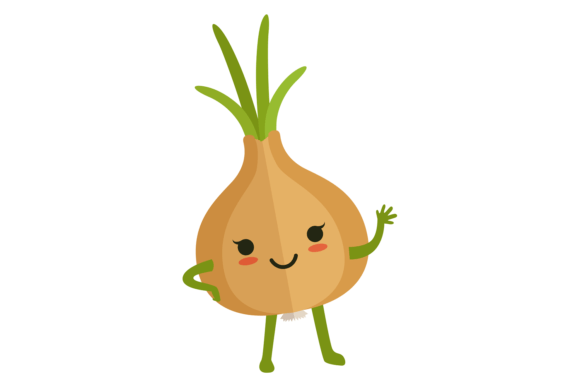
Cute Onion Character. Funny Vegetable Wa
I have stitched hundreds of designs for clients, from corporate uniforms to whimsical baby onesies, and I can tell you that the difference between a good embroidery project and a great one often comes down to the source file. Today, I am putting Cute Onion Character. Funny Vegetable Wa under the microscope. As an experienced designer who reviews graphics before they ever touch a needle, my goal is to determine if this piece is ready for real-world production or if it belongs in your inspiration folder.
When I first opened the files, the immediate mood was playful and approachable. The character features a waving hand, which adds a layer of personality that static vegetables often lack. In the world of embroidery, where we are limited by thread thickness and stitch density, finding a design with such clear visual intent is crucial. This isn't just a generic vegetable illustration; it feels like a mascot waiting to be born. It naturally suggests projects that require a bit of humor and warmth, making it perfect for kitchen-themed items, garden gifts, or boutique apparel that wants to stand out without being too serious.
From Screen to Stitch: A Real Project Scenario
Let's imagine a practical scenario. You are an Etsy seller preparing a holiday gift collection. You decide to create custom embroidered tote bags featuring farm-fresh characters. You pull up Cute Onion Character. Funny Vegetable Wa to see how it translates. On the screen, the isolated white background looks clean, but the true test begins when you map the design onto a canvas tote bag.
The waving hand is the standout feature here. In machine embroidery, limbs that are raised or gesturing can sometimes look stiff if the underlying structure isn't sound. However, the simple lines of this graphic suggest a high potential for success on a tote bag. The rounded shape of the onion body allows for excellent fill stitches, creating a plush texture that mimics the layers of a real onion. When finished, this design would likely sit well on a 10x10 inch area of fabric, offering a focal point that draws customers in immediately. It transforms a standard tote into a personalized gift that feels thoughtfully crafted rather than mass-produced.
Similarly, consider using this as a design asset for a sweatshirt. The cheerful nature of the character fits perfectly with casual wear. Imagine a soft grey hoodie with the onion character embroidered on the chest pocket. The contrast between the colorful threads and the neutral fabric would make the design pop. For a small shop owner, this kind of imagery builds brand consistency. It signals that your business values fun and creativity, which resonates deeply with buyers looking for handmade products.
Where to Exercise Caution
While the concept is strong, every embroidery designer knows that "cute" does not always mean "easy." There are specific situations where Cute Onion Character. Funny Vegetable Wa requires careful consideration. If you plan to use this on a curved surface like a baseball cap, you must evaluate the curve of the hat against the waving hand. Extremities that extend outward can sometimes get lost or distorted on tight curves unless the digitization accounts for the fabric tension.
Texture is another factor. Embroidery relies on the fabric holding the stitches in place. If you attempt to stitch this design onto a highly textured fabric like a chunky knit sweater or a loose-weave linen, the details might get swallowed up. The fine lines required for the facial expression or the fingers of the waving hand could become muddy if the stabilizer does not provide enough support. Furthermore, on thin fabrics, the density of the fill stitches needed to cover the onion's body might cause puckering, ruining the crisp look of the final product.
Dark fabrics present their own challenges. Since the original graphic is isolated on a white background, the design relies on color contrast. If you are stitching this onto a black apron or a navy blue pillow cover, you will need to ensure you have a high-quality underlay to prevent the colors from bleeding into each other. Without proper stabilization and a solid base layer, the vibrant thread colors might not show up with the clarity needed for a professional finish.
Impact on Product Value and Brand Trust
In the competitive landscape of craft businesses, the quality of your finished product directly impacts customer trust. A well-executed embroidery project elevates the perceived value of an item. When a customer receives a personalized gift with a sharp, clear image like Cute Onion Character. Funny Vegetable Wa, they perceive the work as high-end. Conversely, sloppy edges or missing details can lead to returns and negative reviews.
This design has the potential to boost engagement on social media platforms. Visuals that evoke a smile are shareable. A photo of a completed embroidered patch featuring this character could perform well in marketing campaigns for a digital product seller or a physical goods creator. It serves as a versatile design asset that can be adapted for various uses, from a decorative accent on a tea towel to the main attraction on a nursery wall hanging. However, achieving that level of professionalism requires attention to detail during the setup phase.
Practical Designer Notes for Success
Before you commit to running this design through your machine, there are several steps I recommend taking to ensure success. First and foremost, always test the design on scrap fabric that matches your intended project material. This allows you to check the stitch density and see how the threads interact with the specific weave of the fabric.
Review the file formats carefully. The description mentions EPS, JPG, SVG, and transparent PNG. For embroidery, you typically need a vector format or a specific embroidery file (like .DST or .PES) to control the stitch path. If you are converting a raster image like a JPG into an embroidery file, pay close attention to the conversion settings. Ensure that the small details, such as the tips of the fingers or the eyes, are not simplified too much during this process.
Check your hoop size relative to the design dimensions. If the design is large, you may need to split it or use a larger hoop to avoid distortion. Always inspect small details under magnification to confirm that the stitch direction follows the natural contours of the onion shape. Using the correct stabilizer is non-negotiable; a heavy-duty cut-away stabilizer is usually best for maintaining the integrity of the design on stretchy or delicate fabrics.
Finally, verify the licensing terms. If you intend to sell finished products featuring Cute Onion Character. Funny Vegetable Wa, you must confirm that your license permits commercial use. Some digital assets are for personal use only. Understanding these legal boundaries protects your small business from future complications.
By approaching this design with a critical eye and following these practical guidelines, you can turn a simple illustration into a stunning finished product. Whether you are creating a holiday gift, a custom apparel piece, or a unique home decor item, Cute Onion Character. Funny Vegetable Wa offers a charming foundation for your next creative endeavor. Just remember that the magic lies not just in the file, but in the execution.